The Faith
Religion in Dezruland is centralised, but broadly polytheistic. Worship is mainly focused on three major goddesses, known as the Three Sisters:
- Rianke, goddess of agriculture, family and community. She is the most heavily revered of the three, and is associated with Summer & Autumn.
- Naemis, goddess of secret knowledge, research, death and fate. Her devotees live in isolated cloisters and typically take vows of chastity. Associated with Winter.
- Sydaal, goddess of youth, romance and vitality. Hunters, artisans and lovers pay respects to her. Associated with Spring.
These goddesses represent three stages of life, and their domains are very broad, with some overlap. Almost all members of the faith revere all three, and churches are rarely devoted to one single goddess. (Although institutions like monasteries often are!)
The Faith places a particularly high value on family life and community. Marriage, continuing your family line and caring for spouses and children is highly important! Because of this, same-sex relationships are considered quite taboo - although this does not stop the church from being a haven for gay and lesbian sims. The clergy often serves as a way for queer sims to provide for the community & stay true to their faith without having kids of their own.
Other taboos in the Faith include infidelity, deserting a partner or children, disrespect to ones parents or family elders, turning away the needy, theft, murder, and defacing art.
There are also several more “minor” deities with more specialised domains. They are paid homage in specific situations, and some have small cults of their own. These include:
- Renja, goddess of medicine. Supposedly a student of Naemis who betrayed her mentor by sharing her knowledge of healing with those marked for death.
- Lelous, god of art & craftmanship. Merchants often have a small shrine to this god.
- Tyhena, god of war & heroism. This god has “many faces”, sometimes depicted as male, sometimes female, and sometimes ambiguous. Military bases often have statues to this god, and they are also venerated by knights.
- Boona, patron of fishing & the sea. Usually depicted as a mermaid. She also sometimes represents mysteries and the unknown.
- Conos, god of love & marriage. Consort of Naemis. Values dedication to family, being a provider, and chivalry.
- Myagi, goddess of fertility & childbirth. Patron of midwives.
The Church
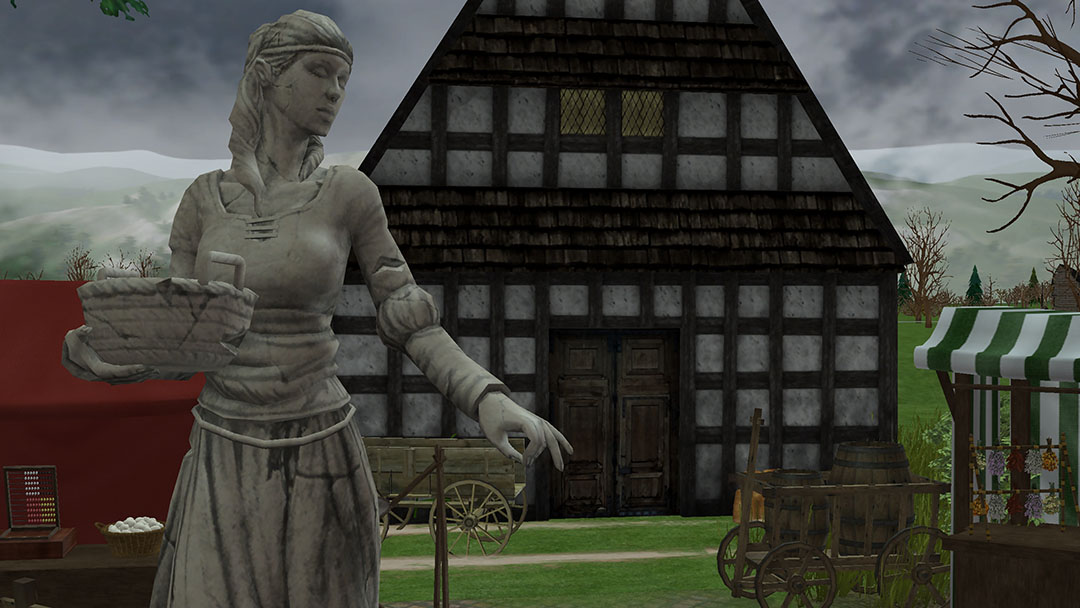
The Church as an organisation is notionally distinct from the monarchy and government - they answer to higher powers. They also predate the crown, being a very ancient religion. The Faith weilds considerable political and social influence, but lacks wealth and military might. The Royal family are faithful believers, however, and it's common for Princesses to join the clergy.
The Church is very much a female-dominated organisation, while politics, soldiering and the like are considered more traditionally “male” domains. There is no rule against men being priests and men do sometimes join the Church, but it’s rare and considered “feminine”. It’s also women who tend to be more religious, broadly speaking.
Members of the Church cannot have families, as this would conflict with their religious duties. However, family life is seen as a Holy duty of its own - so leaving clergy life to start a family is not considered shameful. It’s not uncommon for acolytes to join the church at a young age and eventually leave when they fall in love or get pregnant.
Structure of the Church
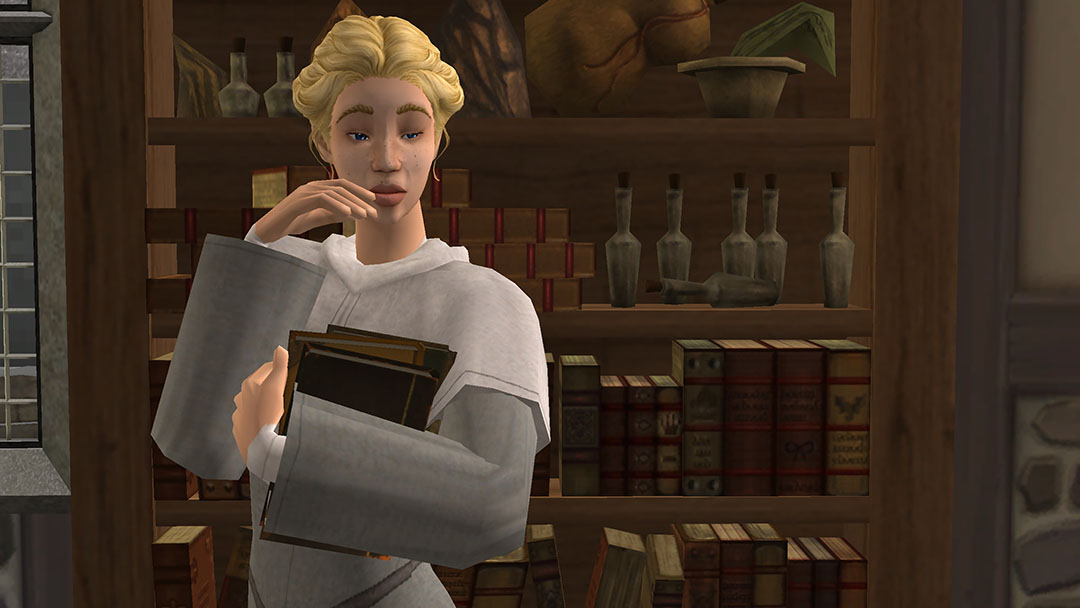
- The Matriarch is the "ruler" of the Faith, also known as the Archbishop. When she dies, her replacement is decided by the Holy Council of bishops, who choose from amongst themselves.
- Bishops, are the leaders of the faith, roughly equivalent to the “nobility” of the church. There are usually about 10 Bishops, each responsible for a Diocese with a Cathedral. A Diocese is about the size of a province/shire, though they are not always divided in the same way as the provinces. Bishops meet once a year for the Holy Council.
- Priests, are usually responsible for religion on a local level, responsible for running a Parish Church. Parishes are roughly equivalent to a village, although some are smaller and sometimes 2 villages will be in the same parish.
- Abbots and Abbesses, are responsible for running monasteries, cloisters, foundling homes, and other religious institutes. The power of these institutes varies - some are of a lower level than a simple priest, others are more important than bishops!
- Acolytes , are apprentice priests or low-ranking monks and nuns. When joining the Church, one must always begin as an acolyte, regardless of wealth, parentage, or background.
In theory, even a humble peasant can rise to power within the church. However, in reality it is rare for this to happen. Bishops often come from noble backgrounds, and favour their own when choosing who to promote! A strong degree of literacy and scholarship is also required to advance in the church, putting poor sims at a disadvantage.
Tithes and Fees
As per the standard MCC rules, my sims pay a tithe to the Church each season, which is 10% of their income. This is paid to the highest ranking member of the clergy in the neighbourhood (currently their priest, but may later be a bishop). The priest then distributes the money between religious institutions as needed.
Sims must also pay the church burial fees is they wish to move a grave to the churchyard. Members of the clergy can use the Law podiums at churches to raise money too - this represents donations from townie parishioners. Religious institutes may also raise funds themselves through business ventures, although this is not particularly common.
Religious Institutions
This is not an exhaustive list - there are many monasteries and abbeys with specific cults and practices.
Parish Churches
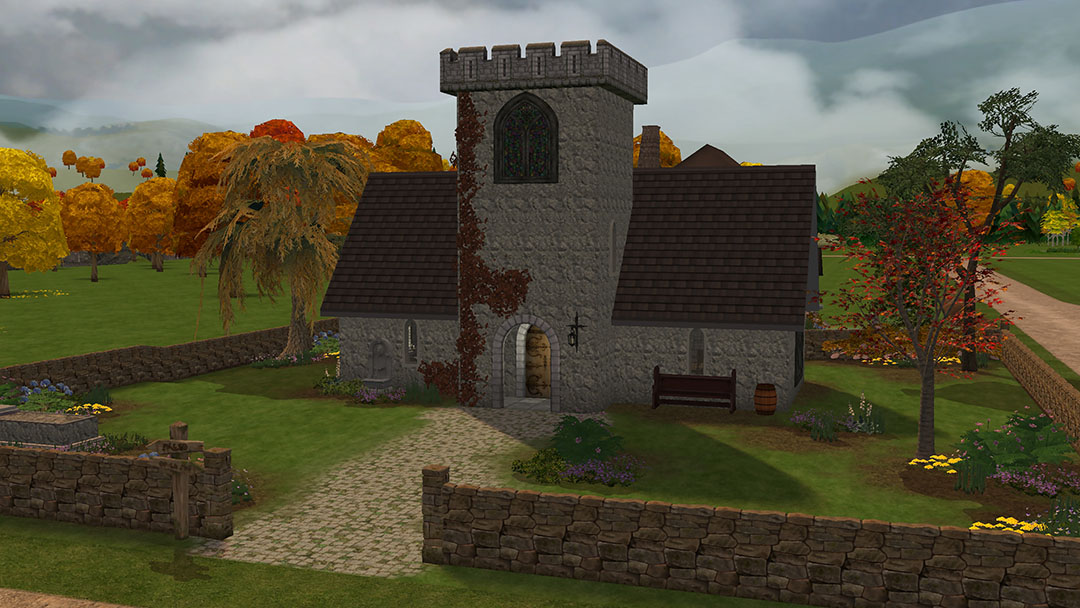
These are places of worship, ran by a local priest. Weddings are held here, along with funerals and blessings for newborns. Churches are built on consecrated ground, making them suitable resting places for the dead.
Almost all parish churched are dedicated to the Three Sisters, unless there is a strong local tradition around a specific deity.
Cathedrals
Similar to churches, but bigger and grander. These are run by a bishop. Only built in large settlements, and usually there is only one per diocese.
Foundling Homes
These are essentially orphanages, run by an Abbess (sometimes with help from acolytes). They are funded by the local Parish, although not all parishes will have a Foundling Home. As the Faith places a lot of emphasis on family and community, orphaned sims are well taken care of and usually receive something of an education.
Once they become a teenager, they have many options. They can remain at the Foundling Home or join a monastery, becoming an acolyte. They may be taken on by a yeoman, artisan or merchant in the community as an apprentice. They can be taken on by a wealthy family as a household servant. They can join the army as a mercenary soldier, or even become a knight’s squire. They can become a peasant, doing basic agricultural labour and paying rent to their lord. Or, of course, they can marry.
Foundlings always have the last name “Ward”. If they remain in the church, they usually keep this name. Otherwise, they can chose their own last name when they come of age (or take on their spouse's name).
Charity Hospices & Almshouses
These are other charitable institutions. The Hospice is a simple shelter that offers temporary respite such as a meal, bathing or clothing to wayfarers and sims down on their luck. It is usually run by the local priest as a sort of soup kitchen.
Almshouses are residential charities for sims in need of more long term care, such as the poor, elderly, insane and homeless. It isn’t typical for these to exist in small villages, but they are sometimes built in larger towns. These are run by an Abbess, and usually funded by a Bishop.
Cloisters of Rianke
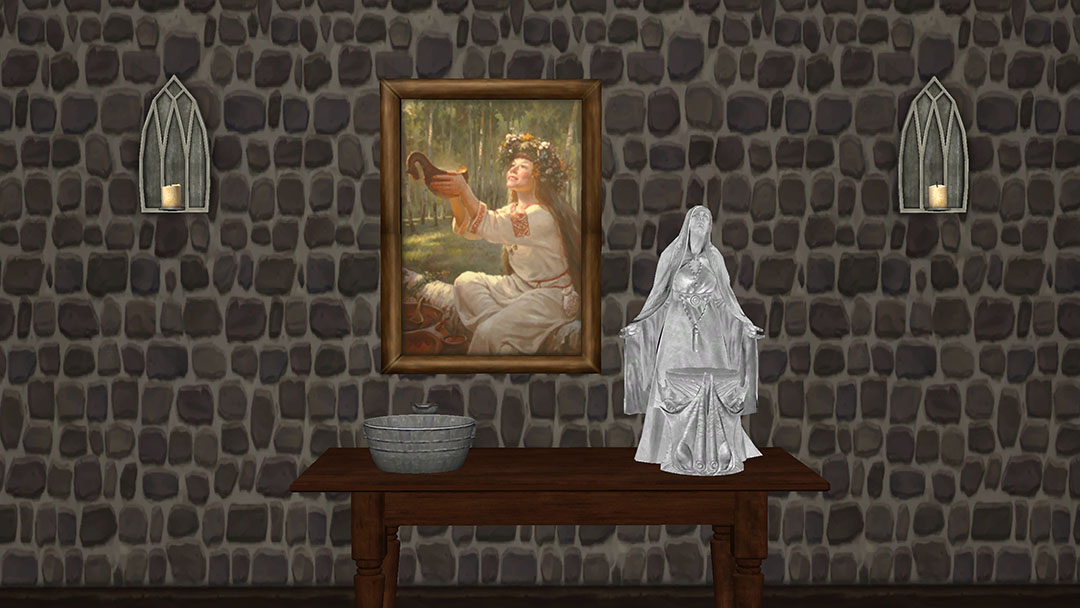
These are the most common type of monastic order, and new acolytes often start out here. They are mainly female, but do accept men. Here sims study, pray, and farm. They are generally self-sufficient, and any excess food is donated to the wider community.
Sisters of Naemis
A secretive and female-only convent, with only a handful of Abbeys. Members typically take a vow of chastity, and it is taboo for them to leave once initiated. Their focus on astronomy & mysteries. Some are even rumoured to study magic!
Circle of Shields
A female order of religious knights. Originally they were battlefield healers, but their exposure to war and battles made combat training a necessity. In theory they do not serve the King like regular knights, instead serving higher powers and the common people. Their Abbeys resemble castles, and also serve as hospitals.
Real World Inspirations
The religion in my game aesthetically Christian-looking and particularly inspired by Catholicism (the dominant faith in the middle ages in England) and The Church of England (the power structure is closer to this). It isn’t entirely analogous to Christianity though - it also takes some inspiration from Andrastianism in Dragon Age (with its focus on women), ancient Greek/Roman religions, and pre-Christian faith in Britain.
“The Watcher” from the Sims Medieval is not a thing in my game, but the Faith uses some similar iconography so that I can use all the lovely conversions. The “Eye” is associated with Naemis.